Category Archives: General

The Heat Is On

A couple of years ago, because I’m old and my feet/legs are continually cold, my other half bought me a Dreamcatcher electric throw, so I can sit there like an old man with a blanket over me, but it’s heated. Then she bought another for herself (and, also for friends and family).

They’re great. We use them regularly, and during the work on the house last year when doors were open and the heating was off, they were a lifesaver.

Then one broke, then the other one broke.

Both the same- the controller (PET-CON-2 or PS7G-H/L) was completely dead. Checking the mains fuse revealed nothing.

A quick search on the Internet revealed you could buy a controller, for £20, but it also revealed this Youtube video from Brian J Wright.

Now, the video does the thing I hate about Youtube instructional videos; there’s a lot of talking to get to the point, but to be fair, it does tell you the fix, Brian clearly knows what to look for.

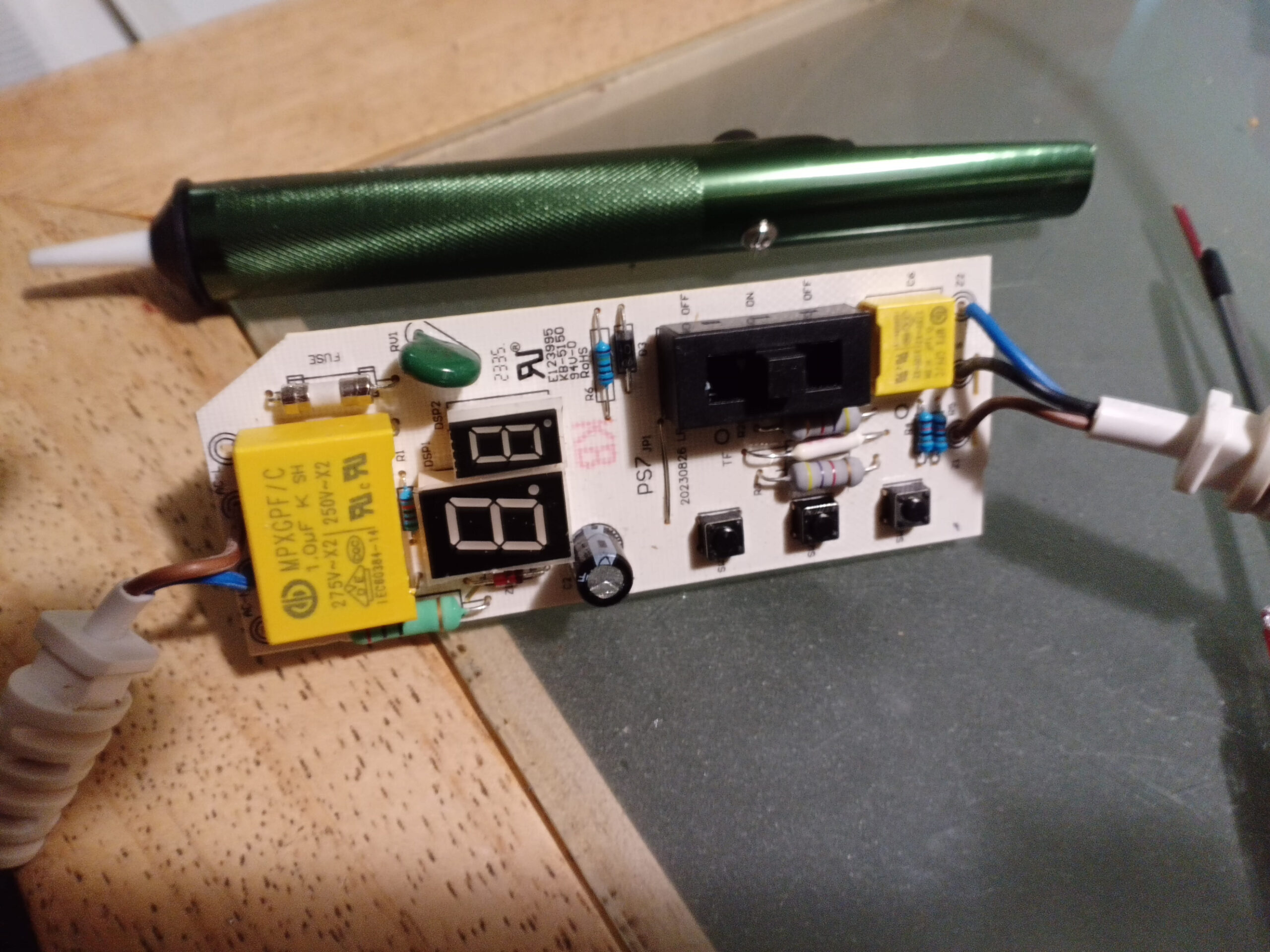
There’s a 102 degree C, 2A thermal fuse, closely nestled under a plastic cover, between two resistors, and sure enough, it was open circuit.

In the picture below, the fuse is the white component just below the slide switch, between 2 resistors.

The circuit board from the controller
The controller board: the thermal fuse is the white component just below the slide switch.

A quick purchase on Amazon of some tri-wing screwdrivers and a pack of thermal fuses, and some careful work with a soldering iron (obviously, overheating thermal fuses would be bad!) and we both have heat again, for less than the cost of one new controller (and I have some screwdrivers for the next annoying bit of electrical or electronic kit), and there’s a bit less e-waste.

I strongly suspect the failure was caused by allowing the controller to sit under the throw itself.

[edit]
The one blanket failed again, and blew the fuse again. Connecting the other controller gave an error display. Subsequent investigation showed something has come adrift inside the blanket and there’s a coil of heater element jammed in one corner, so that one is scrap. I’ll re-repair the controller so we have a spare.

[edit 2]
The other blanket developed a fault too :-(. I wonder if this was the cause of the fuse popping?

Looking Back

I’ve read a couple of books lately that while quite different, seemed to mesh.

The first was Rule Nostalgia by Hannah Rose Woods, a look into why, particularly in the UK, nostalgia for previous times is so powerful, and why our country in particular seems to continually look backwards and cling on to anachronisms, looking for a golden age. One of the interesting things is that people have always done this

Tangentially related was Stuart Maconie’s The Full English, where Stuart does a modern recreation of J B Priestley’s English Journey.

It’s interesting that the first book identifies the particularly damaging nostalgia- that misty-eyed view of empire tied together with English exceptionalism, where we English are assumed to be superior just by being English- all looking back to a time of

widespread ‘nostalgia for a time when life was easier, and Britain could simply get rich by killing people of colour and stealing their stuff’

One of the book’s main points is that nostalgia is highly selective, so we’re expected to accept the duality that the post-war years were a time of austerity and everyone pulling together, except that actually they were

an age when the country had rebuilt itself into prosperity through massive government investment

So we invoke all the “Keep Calm and Carry On” bullshit- a slogan that never actually saw the light of day during wartime- and align it with austerity, when actually, this was never the case. Of course history quite often means a certain variety of history:

I am not sure what is more frightening: that fact in itself, or the enthusiasm with which politicians and right-wing newspapers warn that historians who seek to debunk these foundation myths and dispassionately examine the past are sinister Marxist ideologues seeking to undermine the freedom of ‘Western civilisation’ as we know it. It sounds a bit fashy to me.

So any dissenting voice- one that suggests that (for example) our Empire was built upon trade from behind a gun and by exploitation is seen as unpatriotic and “doing Britain down” in the same way that Brexit would be a huge success if we’d all shut up and just believe. It’s all a basic refusal to acknowledge that we past we’re looking back to isn’t as it was presented anyway, and it’s long gone.

Meanwhile, Stuart’s book starts with:

As I left, Britain had no HGV drivers thanks to Brexit, empty shelves and a collapsing gas industry thanks to rampant idiotic privatisation. There was no petrol in the pumps, no pasta or loo rolls on the shelves and rumour had it the army was about to be deployed on the streets. While in Norway I caught their most popular TV satire comedy show, their equivalent of Have I Got News For You. In it there was a long riff about Britain’s malaises greeted with hearty gales of Nordic laughter. It concluded with one contributor saying, effectively, ‘well, England’s had a good run. But it’s over for them now.’ It was hard to disagree.

and continues on the rose-tinted view of a simpler life in the country that’s received wisdom in the UK (and predominately England):

bucolic simplicity tends to also involve quite a lot of back-breaking physical labour, starvation wages, bullying aristocratic bosses and rapacious landlords. If we think that Laurie Lee’s Cider With Rosie describes the ultimate Cotswolds idyll, it’s worth remembering that there was quite a lot of disease, poverty and sexual abuse mixed in with the cider and snogging. As Lee puts it, ‘Manslaughter, arson, robbery, rape cropped up regularly throughout the years. Quiet incest flourished where the roads were bad; some found their comfort in beasts; and there were the usual friendships between men and boys who walked through the fields like lovers. Drink, animality, and rustic boredom were responsible for most.

and tempers his love of the Cotswolds with

But then I remember the snobbery, the innate conservatism, the private schools, the forelock-tugging, the foxhunting, the parson and squire, the agricultural subsidies, the unearned wealth, the Range Rovers, the pink trousers, the preponderance of wankers

and here is where I felt the two meshed: the imagined perfection of older times, tied in with the overarching desire for some English people to be told what to do by a posho. Over to Stuart again:

England regularly retreats into stupidity and deference, still in thrall to the vain, the dim and the laziest loudmouth in the workshop. Jeeves is dead. But on shining Southampton Water and the misty Fens, in the busy streets of Birmingham, Bradford, Liverpool and Manchester, in ancient, secretive Lincoln and newborn, futuristic Coventry, we are still bowing and scraping to Bertie Wooster and his private club. The personnel may change. Some of them are asked to leave, having been particularly obnoxious or useless. But the club remains, and it remains members only.

For a country that has been here for a thousand years, we are still taking our baby steps towards adulthood.

What is this illusion, this phantasm of greatness these people chase? Is it the one where we trampled on the lives and rights of people all over the world and exploited them to death? Why do we yearn for some imagined greatness when right now England can’t feed its kids, heal its sick or run its trains? How about forgetting about being great? How about being happy? How about being competent?

The whole thing is rotten. The political classes, the broken first-past-the-post election system that skews our allegedly democratic process, the unelected House of Lords, the ridiculous ceremonies and titles instead of actually, you know, running a country. The politicians with outside, conflicting interests, the corruption, and yes, an unelected, billionaire head of state. The continual looking backward, the glorification of war, the racism. The endless privatisation of things that should be public, and in general, the constant boot-licking in search of a non-existent golden time.
Remembrancing

I’m going all contentious again.

Remembrance, quite rightly, is an emotive subject in the UK. The Royal British Legion do a wonderful job, aided by volunteers, in recognition of servicemen past and present, and on Remembrance Sunday, there will be thousands of ceremonies at thousands of war memorials across the country as ordinary people acknowledge the sacrifices made, just as it has for over a hundred years.

Or not, which is where I might be contentious.

The ceremony seems to be morphing, as fewer and fewer people alive recall events of World War II first hand- given that it is now 78 years since the end, to have any memory at all, you’d need to be over 80 now, and to have fought, even at the end, you’d be well into your nineties.

What used to be a solemn occasion- one of, you know, remembering the sacrifice, and the losses both civilian and service, seems to becoming almost a celebration, and competitive.

As the lived memories of the horrors of war fade, we’re left with a distortion; the solemnity and reverence of days gone by now features displays of trenches, model aircraft pitched above model bombs as we pivot into us killing 1600 civilians– and while it is certainly true that Operation Chastise reduced the ability of the Nazis to kill our people, both civilian and forces, and the Nazis obviously did plenty of killing of our civilians, it feels wrong to be cheerily suspending model Lancasters over a memorial for our dead, offset by a model bouncing bomb, and one wonders what the response would be if a German town hung up some Heinkel 111s, perhaps with a jauntily displayed model V-1?

Perhaps I have this wrong, but I don’t feel that this is right. We need to recognise the sacrifices, we need to remember- and above all, we need to try to prevent armed combat whenever possible, because this affects real people, not a few plywood cutouts or tailor’s dummies in a uniform.

I’m sure that many people’s intentions are good, but if teels to have missed the mark to me.

This subject has been covered, much more professionally, by Otto English, here at Byline Times.

I’ll be observing the 2 minutes silence, and I’ll be remembering the sacrifice people made. As usual, I’ll support the RBL, but please, spare me War Christmas.

Wet Paint

Another thing I finally did after a month of waiting for opportunity: a bit of minor paintwork on the Ibiza‘s passenger door: what initially looked like a very worrying (but small) rust bubble (anyone experienced will know that small rust bubbles can be hiding holes) turned out to be really minor, and the result of some thin paint. I’d scraped off the paint, which seemed to not be OE, and treated the very minor surface rust, and gone off to the excellent Paints4U for primer, basecoat and lacquer, then the British summer started raining.

Wet weather and outdoor car painting is a bad idea- in fact, even indoors can be problematic if you trap moisture, so it stayed that way for a while. The actual area of paint was very small, but to get a decent finish, you can’t easily spot paint, it has to spread a bit, and even more so when it came to the lacquer.

I’m pretty pleased with the result:

painted door
The door. The paint is only the bottom few mm, but the lacquer is blended up to the swage line.

I’d not try this in the middle of a very visible panel, but the bottom of a door means you can get away with minor imperfections- it took me a while to spot the initial problem. There’s a bit of orange peel that needs a polish, but in all honesty the previous paint wasn’t perfect, and the door is now properly protected for 25 quid and a little bit of time.

And they all go hand-in-hand

…hand-in-hand through their… Parkgate?

We went on holiday. North, but not that far north, to Parkgate, Wirral.

We’d learned about it, and its surprising place in history from this BBC programme, and it looked like it was worth a go- there’s places to eat and drink, reasonable transport links, and it wasn’t far to go. We’d never been to Chester, either, and that was close by.

An easy journey up saw us there by 3pm, with the traditional lunch stop when heading this way.

Parkgate itself is like a seaside village that isn’t by the sea. It was, once, before the estuary silted up, and as the programme said, a major port. Now, it’s the place lots of people go for a drink, fish and chips, or an ice cream not by the sea. It gets pretty busy at a weekend, but we didn’t have problems getting a seat in a pub or a table in restaurants, which was nice. The one really surprising omission is a shop- not even a Spar-type convenience store: there’s stuff like that up the road in Neston, but none in Parkgate itself. We had a cottage just yards from the main street- blissfully quiet but just a couple of minutes to the pubs and bus stops.

We managed again not to use the car for the week, getting to West Kirby, Heswall, and Chester by bus, and Neston by bus one way, Uber back. We managed a good few pubs, some sightseeing and a river cruise, and some great food, and a sighting in the wild of some people doing a decent job of World Goth Day.

The local buses were good, running to time and turning up, and the current £2 fare cap made travel very cheap. Chester has the sort of bus station evry town should have: spacious, clean, organised.

Get Smart

Forever behind the curve, I finally relented and booked my energy supplier to install smart meters. It wasn’t that I was fundamentally opposed to smart meters for any reason- not for the 5G Death Rays, or the remote disconnection myth, it was more that I never found reading a meter once a month and typing a few numbers into a web page particularly hard, and I basically couldn’t be fucked with the whole inconvenience thing.

Then I got told the electricity meter was end-of-certfication and needed replacement, and I folded: if I’m legally obliged to have a new meter, it may as well be a smart one, and yes, you may as well do both.

The electricity meter proved straightforward: it’s sat by the front door and has only recently gained a cupboard over it and there’s plenty of space.

The gas meter, however, predictably proved that nothing is fucking simple and everything comes with added cost, hassle, and inconvenience. For a start, I’d built some boxing around it a good few years ago, and past me had been a bit liberal with the No More Nails, so now we have some kindling, and I have a bit of DIY to do to rebuild it (but make it more removable). Sigh. Anyway, that done matey arrives and checks it out.

I won’t be able to do that, mate, the ECV won’t move.

(For those that need to ask, like I did, that’s the shut-off valve)

Is that [long pause] concreted in?

Sigh. Yes it is. I’ve never paid attention to it before, but the meter had to drop down off the bracket, which is a bit hard when back in the nineties, before we bought it, this house had new concrete floors, and the gas meter was already in it’s rather odd position in the back room when they were done, and the concrete was taken up to and around the meter…

I have to report that to Cadent as an emergency as it can’t be turned off. Mind, don’t know how they’ll get it out.

Which is how we ended up having a rather pissed-off Cadent engineer chiselling our floor yesterday evening, when he discovered the test nipple was sheared off too, changing this from a 15 minute swap of ECV to that plus a meter change.

Eventually, it came out,

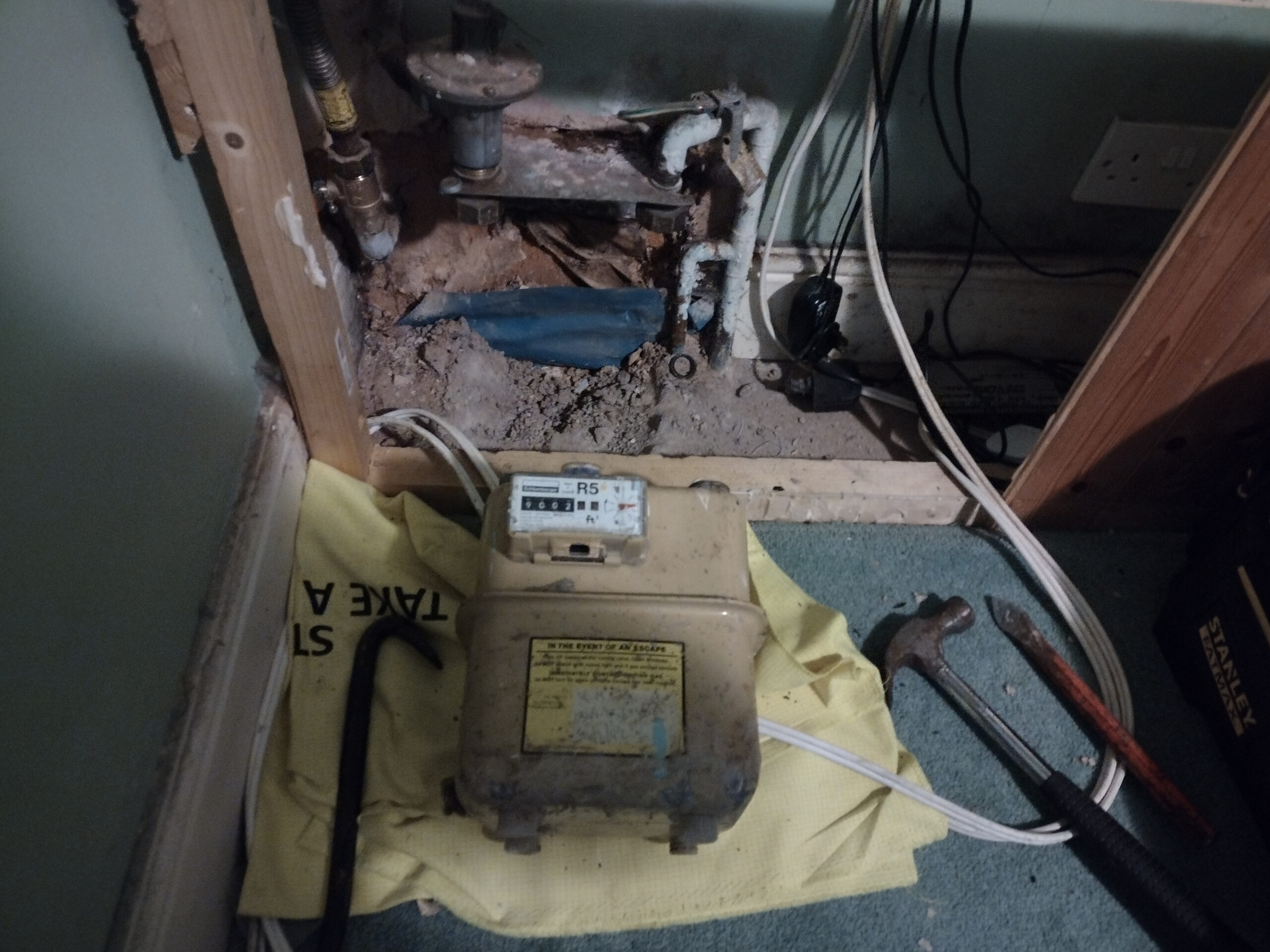
The meter, reluctantly removed.

and a new one was fitted, soon to be replaced by the smart meter…

To add insult to injury, the boxed in cupboard is also home to the hardware for my Runeaudio player- a Raspberry Pi and a USB RAID disk enclosure with a terabyte of storage. That terabyte of storage is 2 disks mirrored, and it seems the mirror has got broken, and where the data was still readable, transferring the one disk to a new enclosure may have borked it, so there may be a lot of ripping in my future if it doesn’t recover 🙁

[edit 24/4/23: The gas meter is fitted- and as it is smaller, without drama, so all that remains it to varnish the re-instated meter cupboard, which I’ve wisely made to have a removable front.]

Classic

Class, in the UK at least, is a funny thing. We’re almost obsessed by it, and it’s deeply entrenched in our society in many ways, from the fact that we continue to absolutely love someone with a posh accent telling us what to do (to the extent that we (collectively) continue to elect politicians that are positively destructive to the interests of the many and continue to support a monarchy, for some reason).

So if we accept that the class system is deeply embedded into the UK’s psyche, then where do we place ourselves?

This tweet interested me:

I maintain that a master stroke of Thatcherism is that it convinced large swathes of the working class that because they could own a house, go on a foreign holiday, and have a relatively new car on HP or PCP that they were middle class, as typified by Essex Man.

The simple fact here is that both the class system is outdated, an anachronism, and that it isn’t a clear cut thing. Many of those builders in the tweet will be company directors, and will probably earn more than some allegedly middle-class professions.

I know several company directors that are definitely working-class, and would be offended if you suggested otherwise, and one of them offered this:

If you are paid a wage, and you rely on that wage, then you are working class.

So then, how to define class?

The obvious one is wage, but we already know that doesn’t work. My above-national-average salary might make me middle-class, but then you might have to include skilled professions like the builders, plumbers, electricians, roofers, etc who probably earn as much or better, but the tweet above unambiguously implies builders are working class.

You might include academic achievement, but then there’s many people who would doubtless count themselves as middle class who are less educated than me, or the aforementioned skilled trades. Civil Servants might be considered middle-class by some, for example, but pay grades in the Civil Service start at around £21k, where the 2021 average salary is £38141.

Obviously, I’m over-simplifying here: the Wikipedia article will go into greater detail, and shows that we’ve actually gained new classes, largely based on profession to try to accommodate the social strata we have today.

Maybe, of course, the tweet is just bollocks, like so much of Twatter, and we should all just drink wherever we like, and accept that the class system is divisive?

New Friends

We have new catty friends.

The loss of Kitty & QT so close together came as a huge shock, but I’ll cover that in a general whinge and moan post. This is about celebrating our new catty friends.

They’re mostly black tuxedo cats, brother and sister, and we’ve had them in a direct rehome from a lovely local couple whose circumstances had changed. They’re 3, and practically identical to look at (now, after 5-6 weeks, we can tell them apart just). I’d been reluctant to look for new furry friends right away, but these 2 looked like a perfect fit and needed a home.

They’re now called Fanty (girl) & Mingo (boy) after 2 characters from the Firefly universe, though they retain (for now at least) their old names on the paperwork (Elliot & Eve) to make the ownership transfer (chips, vet records, insurance) easy.

They’d been with their previous staff since kittenhood, and were obviously very much loved: they came with toys, food, and litter, and it was a slightly tearful goodbye, but we’re hoping we provide a good home- the stipulations were a quiet house, preferably no children, and they must go together, so we think we we’re a good fit.

We’d quite forgotten the stress of new cats: they spent 3 weeks (boy) and 4 weeks (girl) to emerge from hiding- even longer than Kitty & QT and much. much longer than Meowth, who basically came out of the carrier and settled.

Still, they’re pretty settled now. I have a lapcat again. Soon, it’ll be a visit to the vets for vaccinations, then reprogram the cat flap and let them explore the garden.

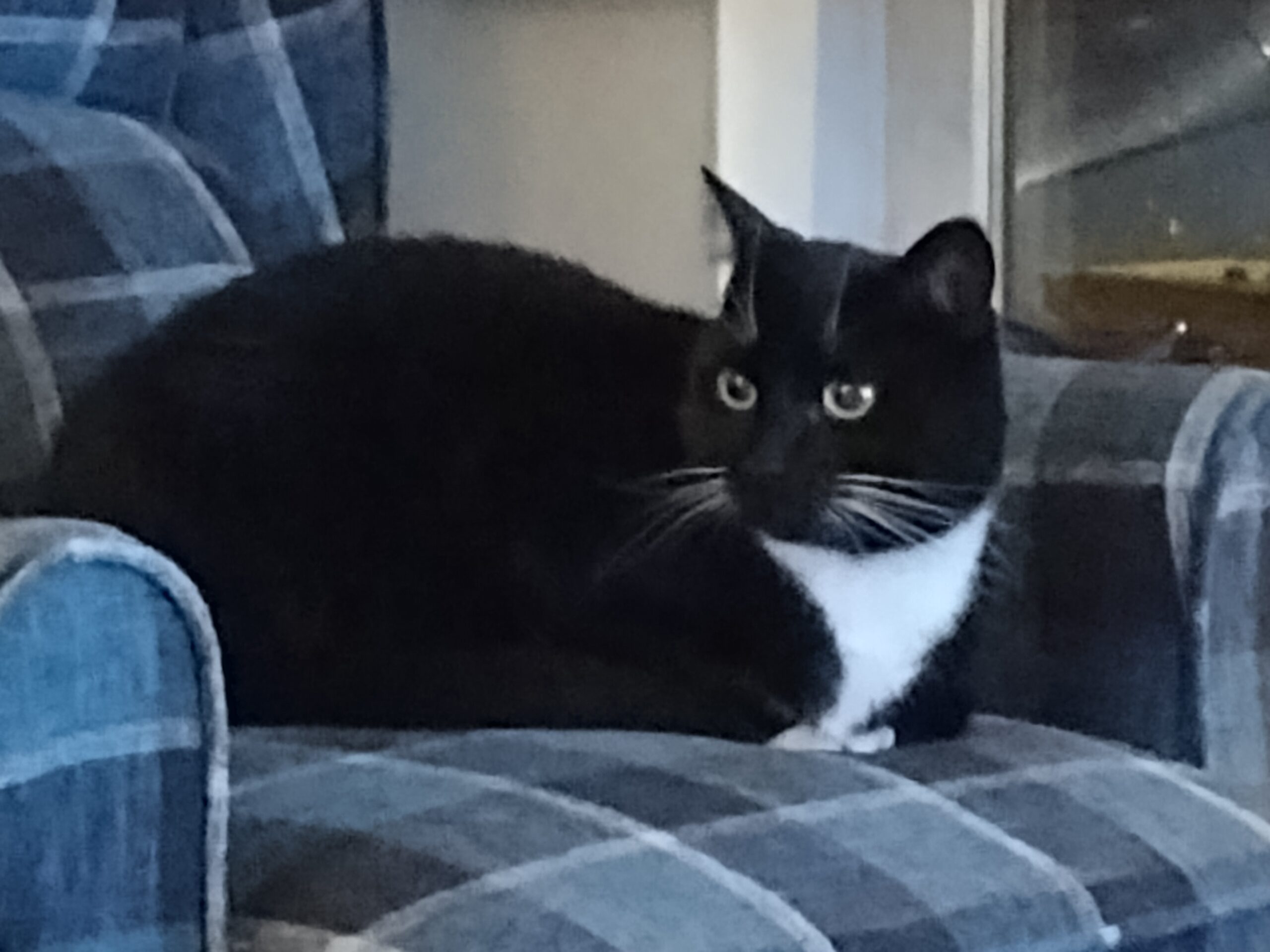
Fanty
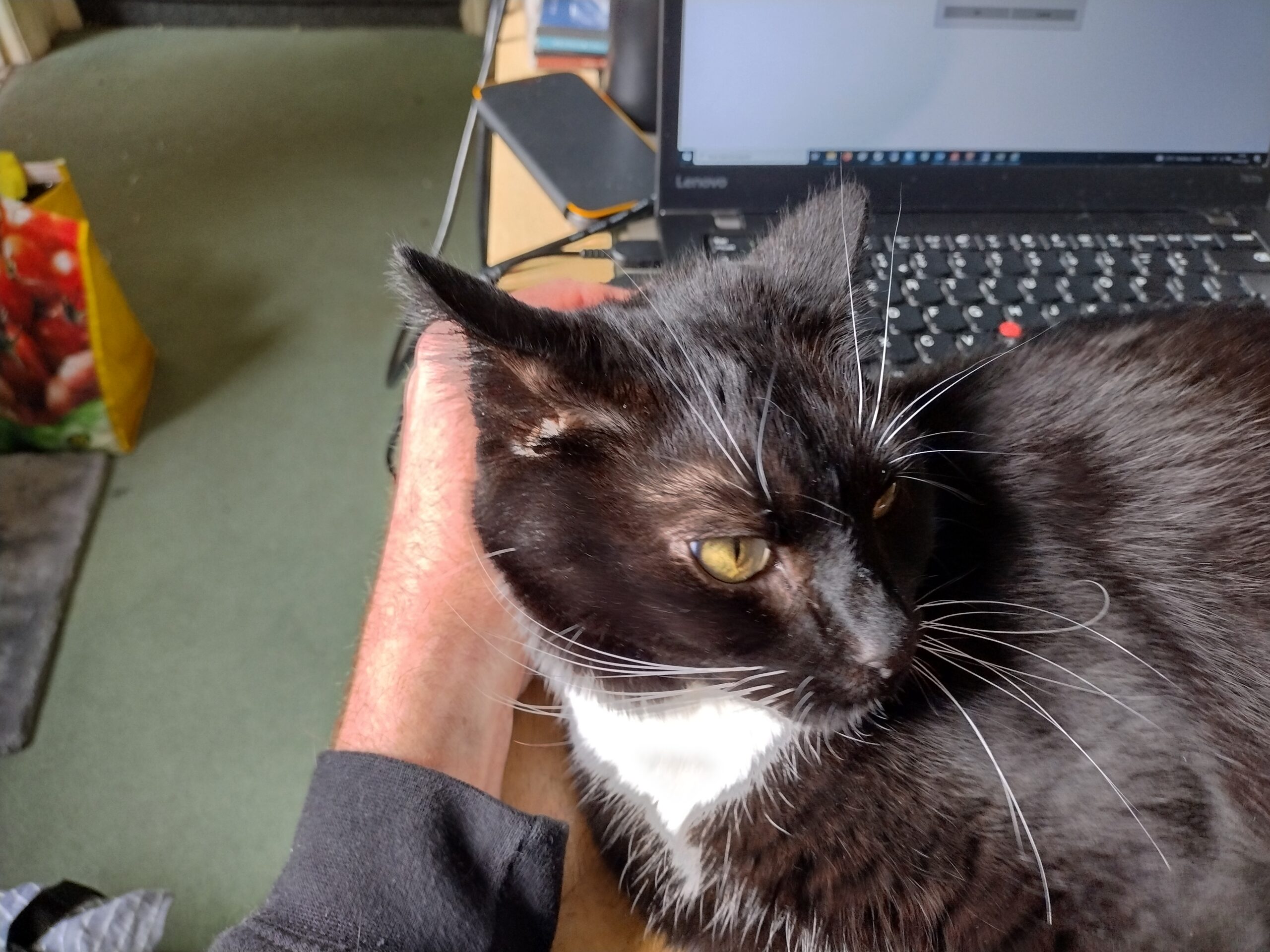
Mingo, aka Elliot, stopping me working.
Mingo
Fanty aka Eve in the early days, taken from across the room with zoom.

Once Upon a Time In the West

Brownhills West. Funny old place, rammed against the Staffordshire border, and it always feels like the edge of somewhere: clustered out on the A5, I once made the joke that anywhere west of here was Wales.

There’s a definite feel of the conurbation ending: The Rising Sun island, named after the much lamented derelict pub has long been a terminus for many bus services out this way.

So it’s quite odd, in one way, to head out there for a night out, but we did, because there’s a great Thai restaurant, and the bus goes there, passing through the town on the way.

Since the demise of the Rising Sun, there’s two pubs: The Crown, a uninspiring feedbag, and The Waterside, previously a working men’s type club. On this occasion, we chose The Waterside, where even if the beer choice is limited, at least we don’t suffer the Marston’s feedbag experience, and it was pleasant enough.

One excellent Thai meal later, another drink in there, and a hobble back to Rising Sun (I do hope when the pub eventually goes, the name remains) and on a bus to Brownhills proper.

Now Brownhills represents an interesting thing: when I was growing up I saw it decline, and when I moved to the area in the early 90s it wasn’t booming by any measure. The last 25-30 years have been hard on the town, but there’s something interesting going on; a parallel to Aldridge nearby, with its increasing retirement population, but not the same: Brownhills has recent housing in the centre, but it isn’t retirement flats: it’s more varied, and the result is that you actually have a social mix, and the High St is, relatively, thriving. There’s 2 recent pubs, a couple of restaurants, and cafes. The place actually feels busy all day and into the evening, where other satellite towns are struggling. Aldridge does well with the retired in the day, and by effectively being Walsall’s restaurant quarter (as a friend observed) in the evening, Brownhills has a more mixed age range, because the housing in the town is more diverse. It also has a lot of takeaways, cafes, barbers/hairdressers: businesses that need a bricks-and-mortar prescence: people complain and say they want other businesses, but these are the ones they actually use.

From the Deep

In a box of photos, letters and other stuff I’m now custodian of were, amongst other things, papers relating to my grandfather, Able Seaman J114619 Cyril Bartram.

War is a difficult subject, especially the way WW2 imagery is used (misused?) in recent times. We should remember that war isn’t a good thing, but something we should leave behind, while remembering those that fought, on all sides. This isn’t a game, this is real people. Which is where the post comes in, giving me lots of tangible, physical evidence of how one bit directly affected my family, nearly 80 years ago.

So then: what I know, what I can piece together and what I remember being told- not by him- I don’t know if he spoke much about his service, but if he did, it would hardly have been to his very young grandson. The stuff I was told was by my grandmother, after his death.

I’d like to thank Barrie Downer, chairman of The Submariner’s Association for some of this information, supplied within a few hours of my query. Other information has come from The National Archives and, of course, the box of papers.

This is a long post, and may contain errors or omissions. I’m not an expert historian or researcher and have little knowledge of the Royal Navy, of ships, or of German PoW camps. I’m a middle-aged IT Engineer who can use Google. Much of what I do know on those subjects comes from Wikipedia and a few evenings of research. With that disclaimer out of the way….
Continue reading From the Deep →