Category Archives: Architecture

Jewel

I had some time off work, and we decided to do something with some of it.

Last year, we went to Coventry, this year, even closer to home, with Birmingham’s Jewellery Quarter. In one way, it seems daft to stay overnight so close to home, but the hotel was a good price, so the increment over a taxi was less than you’d think, and the bonus of being able to just walk back is worth noting.

Also, we had a number of targets in mind: a bit of sightseeing, a few pubs, and a new dining experience, so we found ourselves on a train to New Street again, and went in search of our first target:

"Ozzy" the bull
“Ozzy” the bull, made for the Commonwealth Games, in his new home.

In what they’re now calling Grand Central, the confusingly laid out resurgence of Birmingham New Street and The Pallasades, “Ozzy” has a new home, after public pressure saved him from being dismantled, and he’s quite a magnificent sight.

Onwards. In previous times, we’d have taken a walk out of town down Livery St, but that’s a bit far at one stretch, and rather convienently, the West Midlands Metro runs from Edgbaston “village” (wankers), through the city calling at BHM before rejoining the original line at Snow Hill, handily passing our hotel near St Pauls, and dropping us on Vyse St by the ornamental pissers.

A short walk took us to The Button Factory for lunch, handily dodging the worst of the rain. Onwards to 1000 Trades for another drink, then a quick weave through the backstreets, emerging near the magnificence of The Gothic.

The Gothic, Birmingham
The Gothic, ex pub, now apartments.

The Gothic is now apartments, having been refurbished by Cordia Blackswan, and now a much better sight than nearly 10 years ago:

The Gothic
What was The Gothic pub in Great Hampton Row, Birmingham, in 2013.

Then, we went to church again, went and checked in to our hotel for a nap.

Then, we had a new dining experience planned. The Blue Nile has been on Great Hampton Row for some time, and we finally got there. It’s Ethiopian cuisine. A new one on me, and the food was delicious and the owner welcoming.

In all, a pleasant day and evening, a comfortable night’s sleep, and a new experience, all pretty close to home.

The End of Black Cock?

Well, if that doesn’t get the search engines going, nothing will.

I’ve made end of cock jokes here before, of course.

Black Cock Bridge is being rebuilt repaired. Definitely repaired, not rebuilt.

It’s being repaired, because, well, it dates from 1920ish in it’s current form and is, well, fucked. Or well fucked, take your pick.

It’s a bit of a landmark, and quite a thing to drive over, or to cycle over. It’s steepness is due to it being jacked up over the years to accommodate the canal banks getting raised (by around 4ft 8in, 1.4m or so, it is rumoured) due to subsidence. If you want to read the full details on that, Brownhillsbob covered it over a decade ago in impressive detail here.

I’d been meaning to go and take a look at the bridge: there’s been a lot of noise as the corroded steel has been cut out.

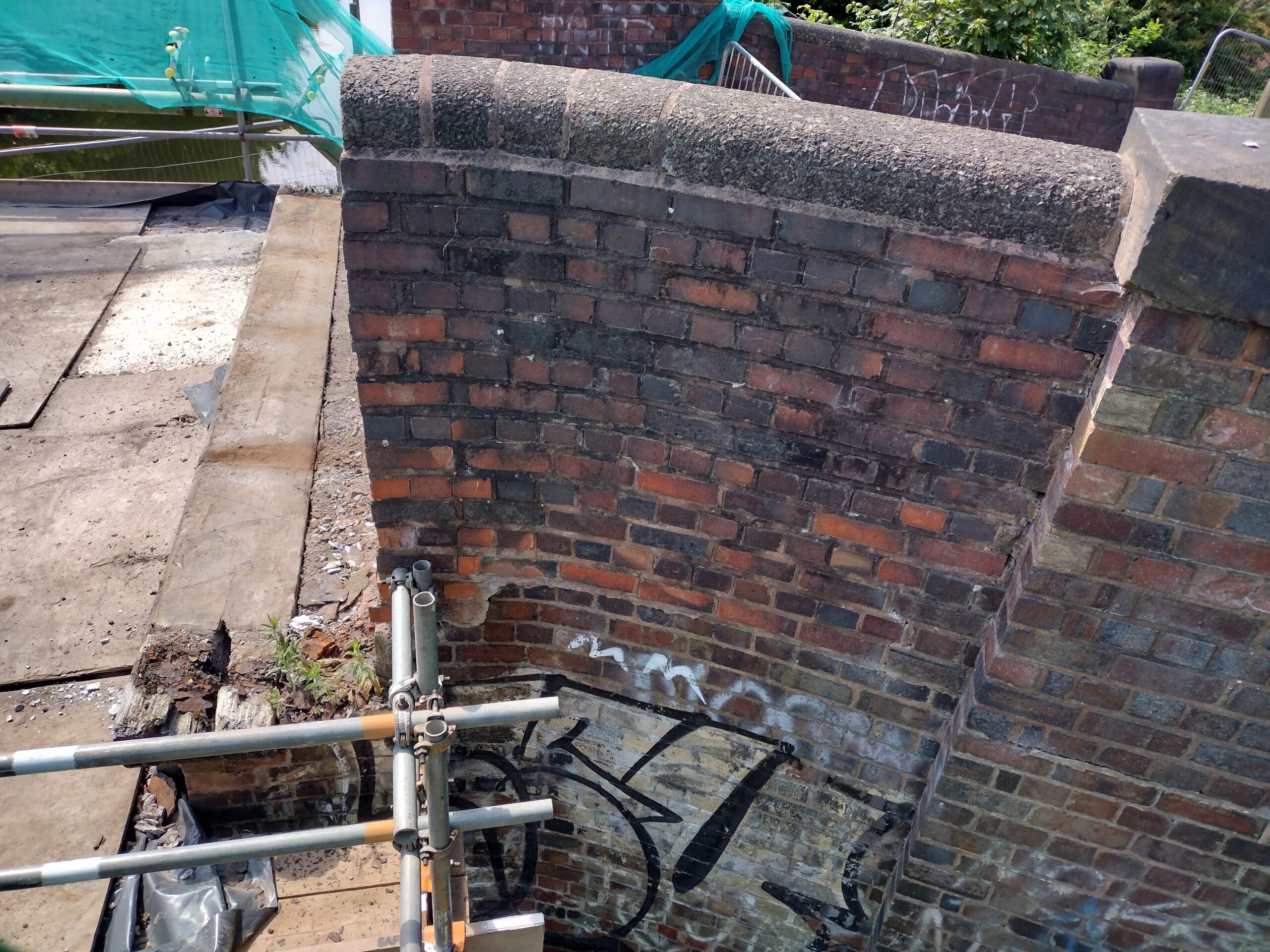
Here’s a view of the west side of the bridge. You can see the wooden beam that the steel deck used to rest on (and see how rotten the wood is). The steel was in an even worse state, from photos others have taken. You can also make out the layers of brickwork as the walls were built up when the deck was jacked up.

Black Cock Bridge under epair
A view of the west side, where the steel deck used to sit on the wooden beam.

and here’s a view of the west side, without the bridge deck there, you can see where the jacks fitted to raise the deck.

Black Cock Bridge under repair
A view of the east side, showing the jacking recesses. The boards are a temporary deck for users to work from and to stop stuff falling in the water.

The there’s this odd bit of tarmac cut out, just down the slope; I wonder what work was carried out under here?

Black Cock Bridge under repair

The fact the bridge is being repaired, not rebuilt, is interesting. Many local bridges have been replaced, most notably the next one up at Clayhanger, in 1994, which was previously very similar.

The problem here is that there isn’t enough room to do that kind of job here: the approaches are too steep and everything is too close, so a new bridge will not meet modern standards and still fit.

It’s been pointed out that you could probably do it by taking the canal over the road on an aqueduct, but the chances of that being done for a minor road are pretty minimal because of cost.

Hence, it’s a repair, and one that will actually leave the bridge narrower by 8in/400mm, and looking rather like the nearby Hollander’s Bridge, which is closed to traffic. Now, it is true that Queen St carries less traffic than Green lane, but one can’t help wonder if Black Cock Bridge will end up closed, as has been mooted before now.

Mere speculation, but it would not surprise me.

Almost Pierless

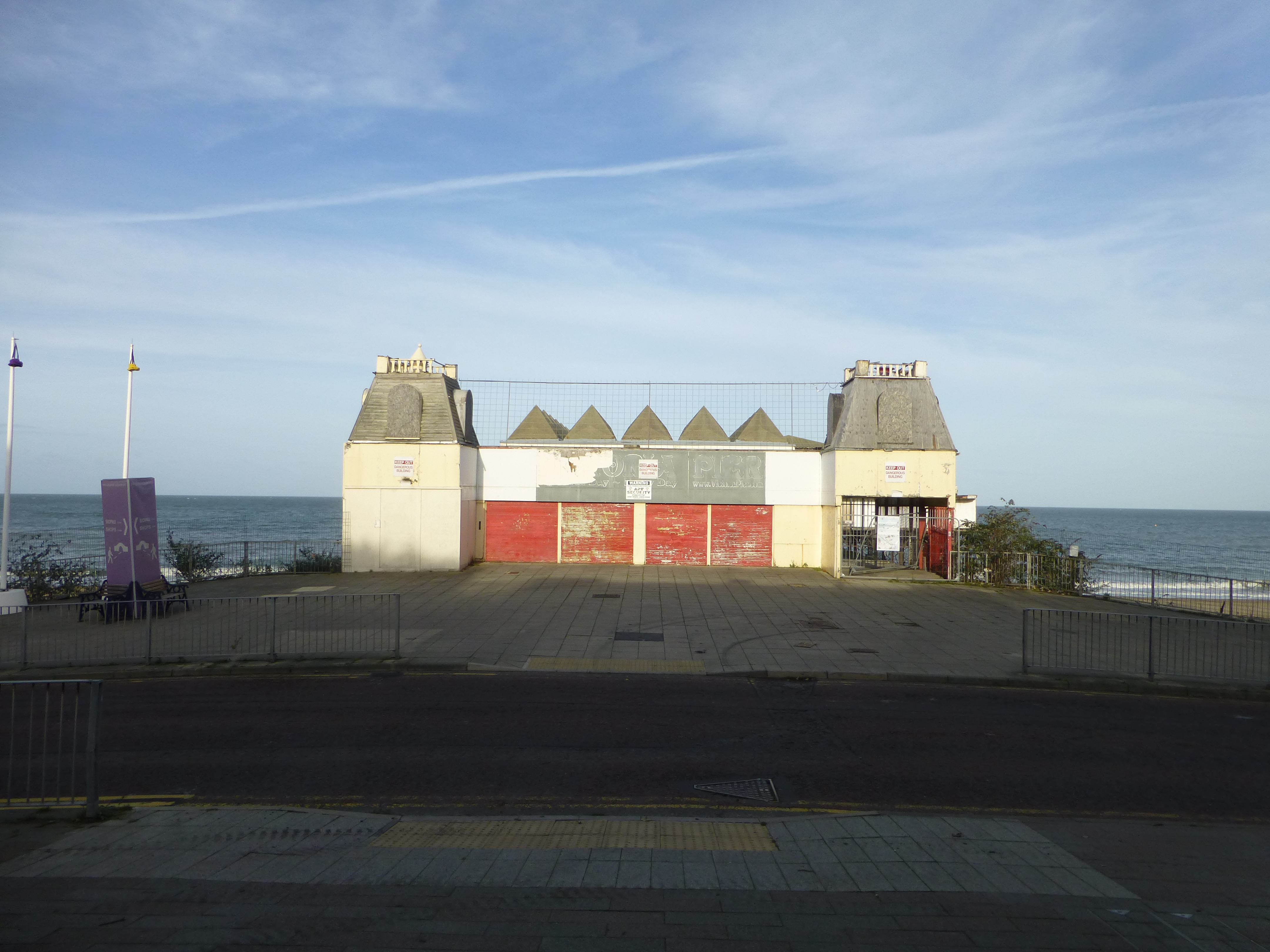
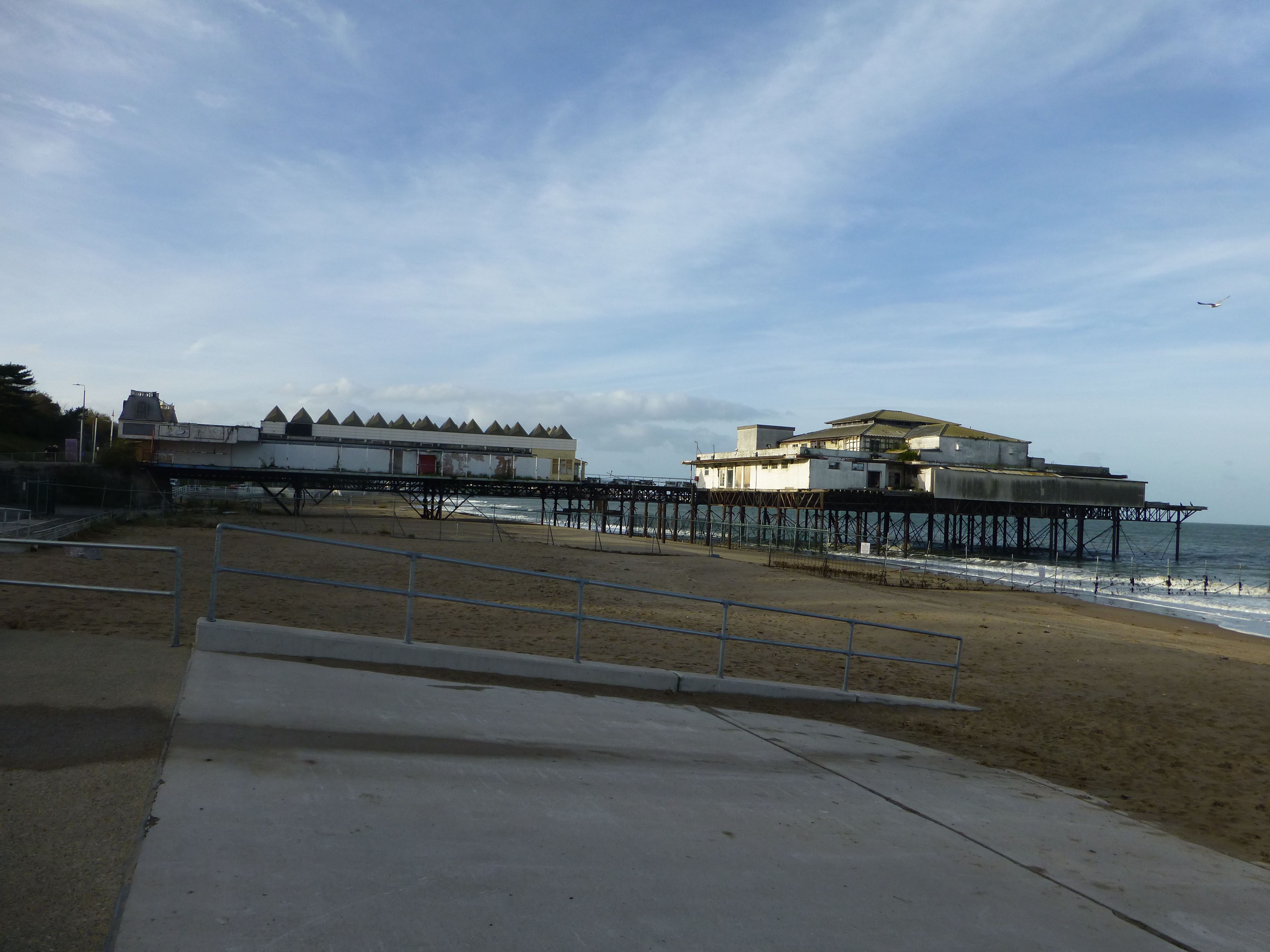
So, our holiday to North Wales in November meant an opportunity to revisit Colwyn Bay Victoria Pier. At my last visit its future was uncertain, and now it’s a done deal: it is being dismantled, with parts being retained for possible re-instatement as a truncated version of the pier at soem time in the future.

I won’t hold my breath. Generally, in this kind of situation, the parts are taken away, then forgotten about until the fuss dies down, then chucked. Call me overly cynical, but I’d be not at all surprised if that happens.

Anyway, I got some more photos to compare to 2014. I tried to get the same viewpoints, but memory and fencing played their parts in preventing this altogether:

Colwyn Bay Pier Entrance from the railway tunnel, 9 November 2017
Colwyn Bay Pier- Walkway now missing the railings- 9 November 2017
Colwyn Bay Pier- (east side) – 9 November 2017
Colwyn bay Pier (east side)- 9 November 2017)

To be honest, it’s now in such a state that the demolition is almost welcome. The beach and promenade have been redeveloped, mostly, and the pier is now just a rotting, dangerous pile of iron and wood in the middle of it. It’s just so sad it was allowed (planned?) to go this way.

Grand

Our trip to Bristol saw us head through Birmingham New St.

BrownhillsBob has been fairly vocal about it before now, as he’s a frequent user. I use it very rarely (if I visit Birmingham I usually travel by bus), so I was reserving judgement until I’d had a decent look at the finished item.

It was better before.

Before, New Street was, it has to be said, dark, dismal, and tatty. Now, it’s shiny in places (even if the shiny surfaces are badly fitted), but there’s lots of unfinished and tatty edges: doors with knocked, damaged or poorly applied paint, boards cable-tied to stair-rails. The whole place is a freezing cold (at least, it is in February) shrine to consumerism: modern cafes and “restaurants” intended to appear small, independent and funky, while actually being part of a huge chain, and having 1990-era exposed duct and cable-tray decor.

I remember the last time this was called good design.
I remember the last time this was called good design. It was the nineties.

The internal paving looks like it belongs outdoors, the “lounges” are quite possibly the least lounge-like thing ever described thus, and you have to pass out through a ticket barrier in order to buy or collect another ticket (like we were, as we had prebooked tickets from here to Temple Meads, but bought local tickets on the day). Some platforms have escalators, and some seem not to, so it’s wait in a lift or walk down stairs with luggage. The layout isn’t cohesive, and the signage is poor, so really, the huge amount of money and time seems to have created a shopping centre that still has echoes of the old one, and a station that’s harder to use, colder, and doesn’t look that much better.

Not so Dynamic Host Configuration Protocol

Warning: Longish, network nerd content. Look away now if not interested.

DHCP. Wonderful thing, it is. You connect a device to a network, it automagically configures itself and starts working. We all use it (nearly) every time we turn on our laptop, tablet, smartphone, PC, or indeed Internet-connected fridge (FFS).

One company I do work for has started using Avaya IP phones- 1600-series ones, with an Avaya IP PBX, which will gradually replace a network of several over 10 year old Nortel PBXs. To make things easier, the phones will be configured with DHCP, a fairly well documented process.

The central site, with a larger network, has seperate VLANs for voice and data, with one DHCP server on the data VLAN. This is not a problem: the Cisco switches are configured with their interfaces having these two lines in:

switchport access vlan 20
switchport voice vlan 30

Which means untagged traffic will use vlan 20, and voice traffic needs be tagged with vlan 30. The DHCP to do this is easyish too;
in the normal DHCP scope that relates to the data vlan, we add an option 242, with the value

L2Q=1,L2QVLAN=30,VLANTEST=0

The phone will boot into the untagged data vlan 20, and read this option in the DHCP offer it receives. It will then know that it needs to tag it’s traffic with vlan 30, and request an address tagged with that. The router for the voice VLAN then has a

ip-helper [address of DHCP server]

statement to forward on the request. In the voice VLAN, we add option 242 again:

MCIPADD=[a.b.c.d],MCPORT=1719,HTTPSRVR=[a.b.c.d],VLANTEST=0

This actually tells the phone how to find the PBX.

This was all well and good, and indeed working well. Get a brand new phone out, plug it into a configured port, and away it goes.

But…

Smaller offices don’t have the seperate Voice VLAN; it just gets mixed in with the data traffic, and they need some of the new phones. No problem. In fact, this should be easy; we can dispense with all that tedious VLAN nonsense, so we can miss out the Cisco config above, miss out the second DHCP scope, and miss out the first instance of option 242, just adding an option 242 to the local DHCP like this:

MCIPADD=[a.b.c.d],MCPORT=1719,HTTPSRVR=[a.b.c.d]

Yes, it’s not the recommended config, but it is documented around the web, and the previous Nortel IP phones managed.

So, a colleague tries it, taking a working phone to a remote site where I’ve configured the server in just that way. The phone fails to boot. Static addressing fails too, with a odd “failed router” message. Trying to emulate the multiple VLAN setup fails too, and breaking out Wireshark (always the last resort, but the most wonderful tool for free) showed no DHCP requests reaching the server, and testing the server with a laptop works just fine.

Much head-scratching and a full day of testing and debate the next day reproduces the fault at the main site, and a bit more googling reveals that what the PBX engineer told us about not being able to reset the phones unless they register with a PBX is just wrong, though there’s many different suggestions of how to do it, depending on firmware. A reset to factory produces a phone requesting configuration in either the single-VLAN or dual-VLAN operation and booting correctly.

The problem here is that the phone here is very much misunderstanding the Dynamic part. It should, as all the devices I mentioned at the start do, check in with the DHCP server at each boot, and thereby cope with moving site or a network change. It doesn’t. It caches configuration data, trying to use it even when the network around it has changed substantially.

To me, this is just broken behaviour, and here’s the point of the post: if your Avaya 1608/1616 IP phone doesn’t seem to be taking any notice of your DHCP server, then the answer is here: from the linked blog:

Plug phone in.

When "* to program" shows press *.

When "enter PROCPSWD" shows enter C R A F T # on the keypad.

Press # to all the values shown and when "Enter command" shows (will be the last option) press the mute key and enter the following: C R A F T C L E A R #

"Clear all values?" will show. Press # and # again to confirm.

Amongst Piers

I’ve been away on business in Cardiff; network monkeying and packet pushing. Cardiff is an interesting city- I’ve never been before, and impressioms?

Friendly people, great restaurants, “vibrant” nightlife, good pubs (though the earlyish starts, a couple of late finishes, and alcohol combine to make a tiring experience…). There’s a lot in common with other cities, of course, both good and bad, but overall a nice place, though the traffic was a nightmare, with endless traffic lights- and the roads don’t work well for motorised traffic, cycles, or pedestrians- but more of that in another post.

In between proving that “one code per device” and “you won’t be able to create your own networks” can be defeated with NAT and randomly gaffertaping cables, I managed to get a bit of time out for a visit to nearby Penarth, so a couple of drinks and a pier trip: I picked a good day: it was warm, sometimes sunny, and a Penarth had a happy, relaxed air to it.

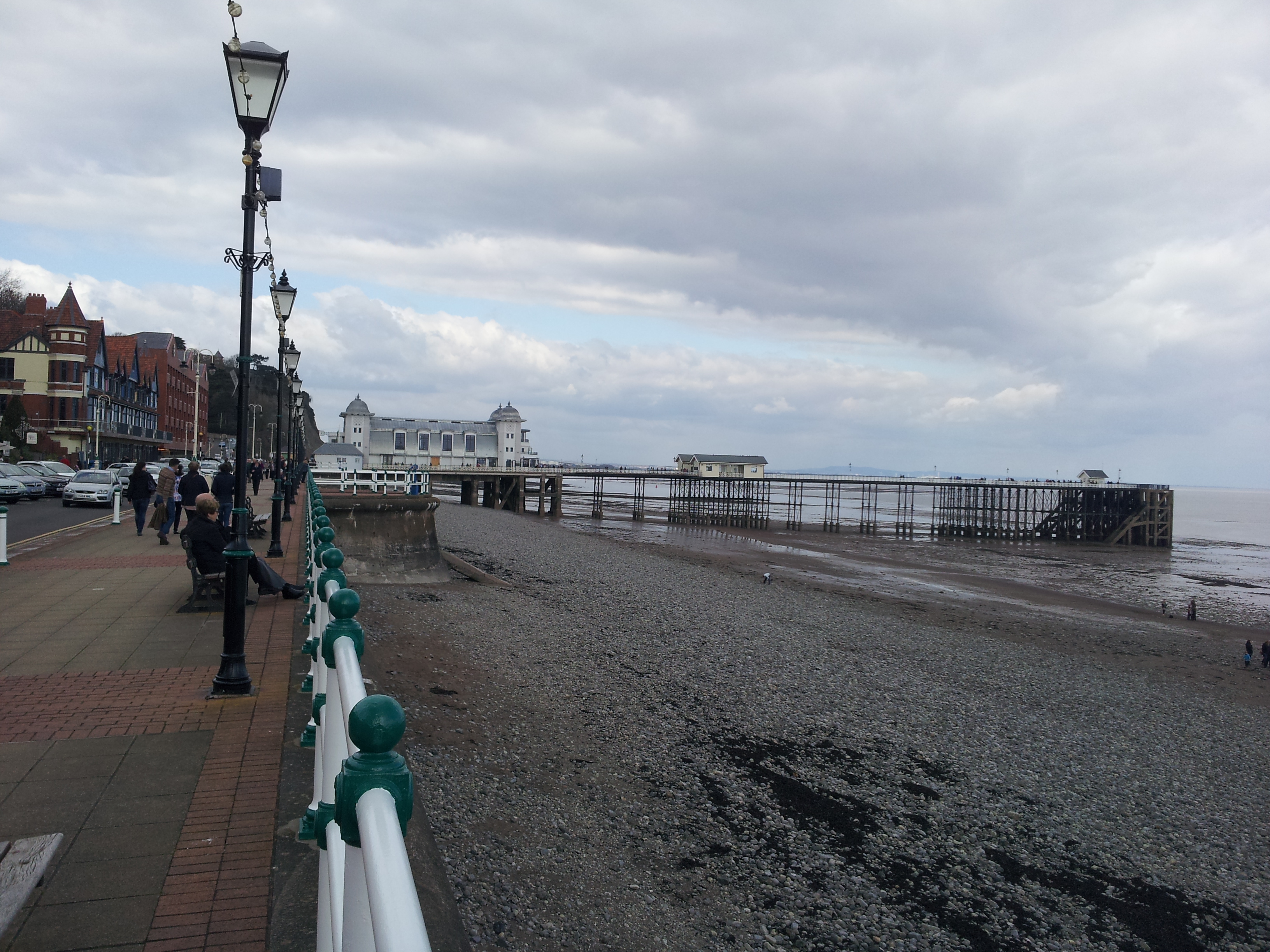
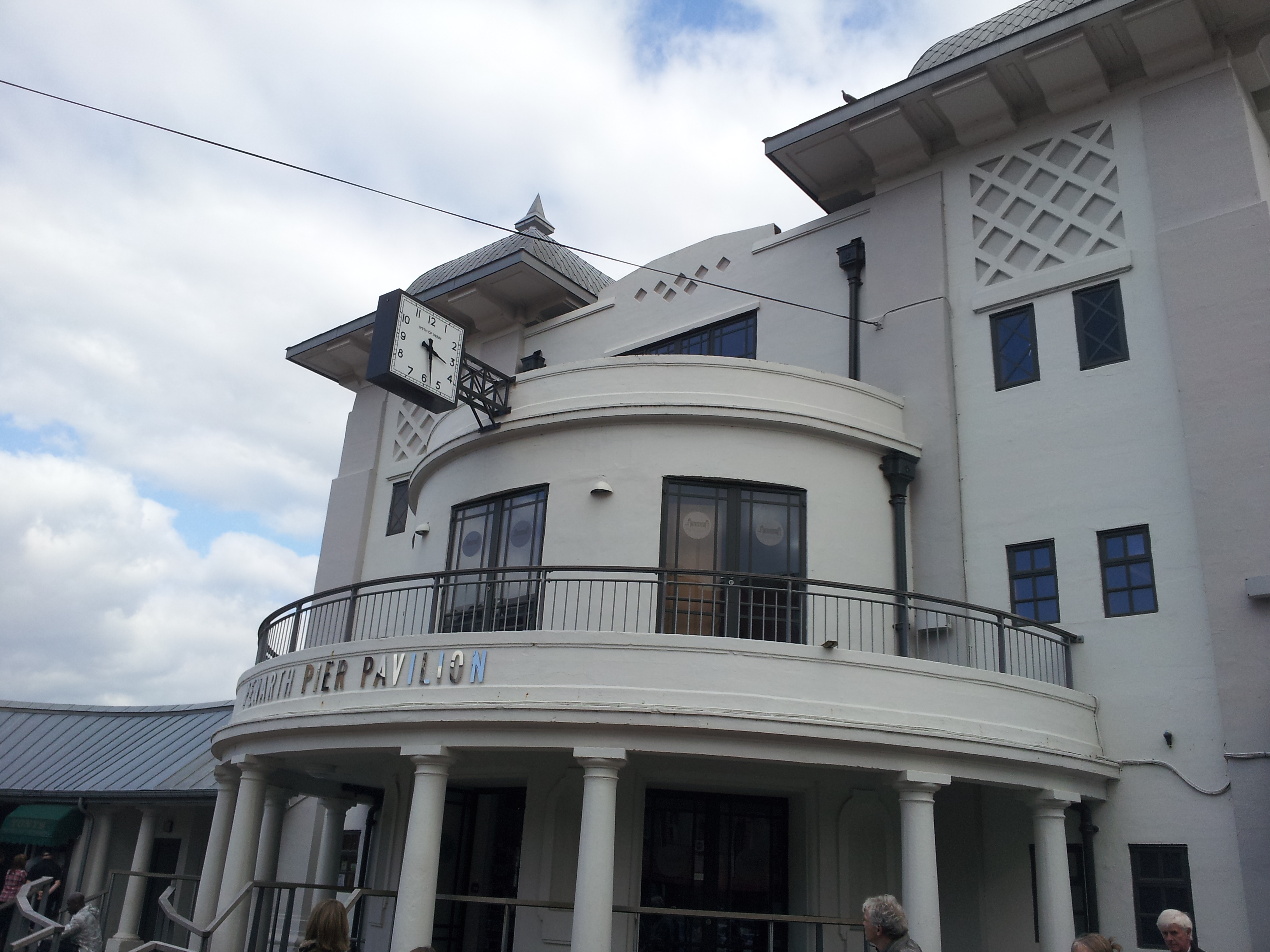
Penarth pier is beautiful. A proper pier that actually reaches the sea, with a lovely, recently restored pavillion, it’s owned by the council, and is a public space and cinema. There’s a nice tearoom too, and everything is in good order outside too: all the planking is complete and in good order and the pier was busy with happy crowds on Easter Sunday- this considering the pier is a short way from town. Colwyn Bay take note. I took some cameraphone snaps:

Penarth Pier
Penarth Pier

Penarth Pier's Art Deco Pavillion: that clock....
Penarth Pier’s Art Deco Pavillion: that clock….

but if you want decent pics, Google has loads that are better.

A short walk into town, and Penarth has some great architecture too: it’s fairly affluent now, and has been in the past too, by the looks of it, with some grand Victorian buildings and a couple of Deco gems too- yet not up itself, though the locals in one pub proffered the opinon “try living here”. There’s no pleasing some.

Connection Reset by Pier

We decided to have a few days away, and to continue our pier-bothering, we went east again, to within easy distance of Great Yarmouth and Lowestoft, so it was a high six to Norfolk, via that old favourite, the A14.

The Cambridgeshire speed nazis have at least now replaced the Gatsos with average speed cameras, with the result that the speeds are now even, rather that 85-brake-to-60-back-to-85. I’ve often said that if you find dual carriageways or motorways boring, then either you’re going too slow, not paying enough attention, or both, but miles of straight, flat, surprisingly quiet DC at 70 mph on cruise control tests that maxim. Mind, if the truck at the end of the M6, just before the infamous Catthorpe Interchange, had been paying better attention, we’d have had an even quicker journey. Fortunately, no one seemed to be seriously injured, but it won’t buff out.
Continue reading Connection Reset by Pier

Pier Pressure

We’ve been off to North Wales- precisely Llandudno, for a few days. This was mostly a weekend away just to get away, but there was an ulterior motive; more piers.

The first, a visit on the way, was Colwyn Bay Victoria. It’s been totally shut since 2008, with a chequered history, and is now , frankly, in an awful state. There’s been the traditional fires in 1922 and 1933, with rebuilding, some highly dubious modifications while owned by THF, and a 1976 threat of demolition that was thwarted with a petition, followed by a further one in 1987. The full history can be found here at the NPS site, and also here at the site victoriapier.com, a site owned by Steve Hunt, with whom the story gets odd, rather than just the normal sad decline and abuse.
Continue reading Pier Pressure

Another Brick in the Wall

One for the Walsall history types.

One of Walsall’s better buildings, 41 Bridge St. You can see a picture, and read details here, on Walsall Council’s local listing page. or here on Flickr. Yes, amazingly, this building is not listed, just locally listed, and we all know what protection that gives.

Anyway, this is a great building, and is in use, so unlikely to get the attention of the civic arsonist. It’s rather beautiful, what with all the ironwork on the roof and such, but sitting outside the St Matthews Hall pub the other night, something struck us:

41 Bridge St, from where it approached Lichfield St. There's something odd about the 2nd floor,
41 Bridge St, from where it approached Lichfield St. There’s something odd about the 2nd floor.

a section of wall has been entirely rebuilt in modern brick: the roof and either end look original, and the new work is clearly intended to facsimile the original, but doesn’t quite manage it. I know this building has been the subject of renovation (I think I recall the ironwork being replaced/refurbished), but what happened here, anyone? It’s quite an odd thing- did the bulding suffer damage?

I remember the building as the Heart of England Building Society myself- formerly Walsall Mutual Building Society, apparently.

Pier to Pier

We decided to pop away for a weekend, but other appointments kept us at home on Saturday, and needed us back on Tuesday, so just one night away. This meant somewhere reasonably close by, so Weston-super-Mare it was. The resort’s been a popular visit for West Midlanders for years, to the level that the local rag gets published in the town.

My last visit was sometime around 1996, when we drove in looking for lunch, didn’t like the look of it much, and drove out again. The one before that was a day trip sometime in the 1970s, on a coach, when I were but a lad.

Since then the prom has been done up, and the pier has had a disastrous fire and amazing rebirth.

It now looks great, and despite the Tripadvisor whingers, well worth the £1 entry fee:

The Grand Pier
The Grand Pier

As a fan of English seaside, it’s nice to see a pier in such good conditiion, unlike the Birnbeck Pier, a short morning walk just up the coast, undergoing emergency repairs by the looks of it, with the lifeboat station in temporary accomodation on the seafront. The pier is in a shocking condition, pictures here, and 2 Urbex reports here (2011) and here (2007), showing the rapid deterioration.

Birnback Pier: just look at the corroded support bracing.

I like piers: love them, which makes this list sad reading, and a good proportion of this list distrubing too- just look at this site, for example.

That made our diversion on the way home the next day all the better: Clevedon Pier also has a chequered past, having suffered partial collapse, but has been restored and is now both in great shape and grade 1 listed:

Clevedon Pier in all its beauty.

with lovely cast-iron fittings. It’s small, and there’s no amusements (just a tea room), and it costs more that Weston’s Grand, but it’s a structure of beauty, and an example of what can be done. Which seaside pier next?